Saturday, 5 January 2013

NY Res 2 - Why vegetarianism?

As mentioned in my previous post, my second New Years resolution is to move to a largely plant based diet - or in other words, become a vegetarian.  However, this is not because I am overcome with guilt at eating lovely cute fluffy animals (although if I think about it too much....)  I went through that when I was a teenager and was vegetarian for around 3 years until I woke up after a heavy night on the town and had a craving for roast chicken.


No this has come about following a desire to understand more about the effects of diet and nutrition on 'western' diseases, diabetes in particular.  I hesitate to call diabetes a disease as it is in fact largely controllable and preventable through diet and lifestyle.  I bought a book over Christmas called 'The Reverse Diabetes Diet' by Dr Neal Barnard, and by a strange coincidence, my brother bought me a book for my birthday in mid December called 'The China Study', by Dr Colin Campbell, following all my recent blogging about intermittent fasting and nutrition.

Both of these books advocate a plant based diet based on compelling and authoritative evidence which suggests that animal protein and fat are largely responsible for the majority of western illnesses including cardiovascular disease, cancers and diabetes.  Both books are a fascinating but scary read but the evidence is clear.

In the China Study, Dr Colin Campbell, Professor Emeritus at Cornell University in USA, details the connection between nutrition and heart disease, diabetes and cancer.  It is recognised as the most comprehensive nutritional study ever conducted on the relationship between diet and the risk of developing disease.

The study looked at dietary and lifestyle factors associated with disease mortality in China, which compared the health consequences of diets rich in animal-based foods to diets rich in plant-based foods among people who are genetically similar.  The authors write that "as blood cholesterol levels in rural China rose in certain counties the incidence of 'Western' diseases also increased.


The authors write that "several studies have now shown, in both experimental animals and in humans, that consuming animal-based protein increases blood cholesterol levels. Saturated fat and dietary cholesterol also raise blood cholesterol, although these nutrients are not as effective at doing this as is animal protein. 

In contrast, plant-based foods contain no cholesterol and, in various other ways, help to decrease the amount of cholesterol made by the body. They write that "these disease associations with blood cholesterol were remarkable, because blood cholesterol and animal-based food consumption both were so low by American standards. In rural China, animal protein intake (for the same individual) averages only 7.1 grams per day whereas Americans average 70 grams per day".

There is a China Study Community website which shares the findings of the research plus news stories, event information, recipes, reviews, and more from the leading influencers in the plant-based community.


I'm really excited at becoming vegetarian again, not least because since starting the IF lifestyle, I have been enjoying vegetables much more as they are low in calories and fat but full of vitamins, minerals and dietary fibre, and they fill me up!  I've also been eating more and more plant based proteins such as pulses and beans but particularly oats (porridge, oatcakes etc) and seeds. 

Seeds have become a little addiction for me - now having Holland and Barrett's fabulous Omega Sprinkle on my porridge every morning, as a snack and on greek yoghurt in the evening.  The Food Doctor also has a great range of seeds and nuts  http://www.thefooddoctor.com/Our-Range-CHSTORE/


I also absolutely love all things soya bean - including tofu in its various forms and edamame - young soya beans most often found in Japanese restaurants but now readily available in supermarkets next to the frozen peas!!  To learn more about incredible health benefits of these humble little beans, take a look at my post of 10th Sept last year.... http://walklighter.blogspot.co.uk/2012/09/breaking-my-fast.html


Tuesday, 1 January 2013

NY resolution - nothing new for a year!!

HAPPY NEW YEAR EVERYONE!!

It's that time again - party, get drunk, make a fool of yourself, spread your mascara all over your face as you get emotional about the year gone by and share your hopes about the one ahead with your family and friends.

Well, yes......but once you've done that, its the big decision of the year - which New Years resolution this year?...... lose a stone, walk up the escalators instead of stand, generally be a nicer person, grow a beard (well the last one's not for me...... at least not yet).

Well, this year, I've decided on two big ones - go vegetarian and buy nothing new for a year.   The decision to go vegetarian is based on health grounds and Ill go into more detail about that in my next post.  In addition to these two I will continue on my Intermittent Fasting journey and will continue to post about that through the year.

So my second resolution - to buy nothing new for a year?...... I've been coming to this conclusion for quite some time but it's always at this time of year it comes back to me as something which I should try following (albeit in a small way) in the
footsteps of some inspirational people, most notably No Impact Man.  Colin Beavan, a guy from New York,  embarked on an experiment in 2007 to try to live for a year without having any net effect on the environment.  You can read more about him here... No impact man


This time of year is, despite best intentions, inevitably dominated by consumerism and I'm just as guilty as anyone as I buy presents for those I love.   But do we really need new stuff?   Well 'need' is relative of course....there are those who would say they 'need' an iPhone 5 or a kindle..... But there are very few things we really do need in life..... Water, Food, shelter, clothing, medication, some basic comforts..... But the rest is simply what we've become accustomed to enjoy.

I'm old enough to remember life before the iPhone, life before the mobile phone, life before the Internet and even life before the personal home computer...., and you know what?    It was great - we were creative, used our imaginations, had fun and talked to each other.

I'm not advocating going back to a pre-internet life as I appreciate things have moved on and I enjoy the benefits the internet can offer.  I also believe that personal mobility and flexibility are the future and the internet and personal communication devices can help with that.  BUT..... What I'm trying to say is that if we try, we can manage without upgrading our phones, TVs and computers quite so often.  We can buy fewer clothes, and slow down on updating our wardrobes, changing our home decor and kitchen appliances!

There is surely enough 'stuff' already out there for us all to live happily without buying newly manufactured products for some time.  New products require raw materials which have to come from somewhere - unfortunately, we are stripping the earth's natural resources at a rate which is completely unsustainable.

As I wrote in my post of 26th Septemberit currently takes the planet 1.5 years to regenerate the natural resources used by the global population in 1 year. Current UN scenarios estimate that by 2050, if population growth and consumption trends don't change, we will need 3 planets to support us...... 

With that in mind, I have decided that my New Years resolution is not to buy anything new for a whole year.  So what about consumables?  Well there are those which I would consider essential such as food, basic toiletries and medications.  Non essential consumables would include stationery, Make up, etc...... I'm sure I will encounter other examples as I go along but I'll post these along with whatever solution I come up with as they appear.

I'll also be looking for more natural alternatives to some products such as using grape seed oil as a hot-oil treatment to replace hair conditioner....

So items I will not be buying include:
Clothes
Shoes
Household items
Kitchen items
Electrical goods
Stationery
Books
CDs
DVDs

This doesn't mean I cant buy any of these items but if I do they must be second hand - so bought from antique or charity shops or sourced through free-cycle schemes.

I see this as just a part of a larger picture.   In addition to this, of course I already cycle everywhere as my partner and I sold our car a couple of years ago and now use our legs, bikes and public transport as our means of getting around.

Also, as already mentioned above, we are going vegetarian this year, so will be eliminating all meat and fish from our diet.   This will also reduce our packaging waste as we buy vegetables loose from the local market.   I hope eventually to be able to eliminate all non recyclable packaging from my life too..... more on this in a future post.

Good luck with all your New Years resolutions and if you're doing anything similar, I'd love to hear about it.


Wednesday, 19 December 2012

HAPPY CHRISTMAS!...Now Eat your sprouts and drop a dress size!

A drum roll just wont cut it this time - full on fireworks are required for this announcement!!
Some weeks ago, you may remember, I set myself the target of dropping another dress size before Christmas..... And today was the day..... I am now the proud owner of a size 10 pair of trousers!    Truly, I am lost for words....,, even better ....that is a US size  6!

I  am living proof that undertaking the Intermittent Fasting lifestyle really can achieve significant changes in weight and size but, alongside that, I can also now report that my feeling towards food has fundamentally changed.   Yesterday was my birthday...... And I chose to spend it on a light day.... Or 500 calories.  

To be honest, this time of year is pretty tough with Xmas lunches, office parties, drinks with friends etc and I've had my fair share in recent days...... However the limited over-indulgence I have experienced so far this season in fact made me feel quite ropey.   I seem to have developed a low level intolerance particularly to refined foods which are in abundance at this time of year.   So after a few days of eating and drinking all sorts of Christmas fare, it was blissful to have a day of eating little and light.  Believe it or not, it felt like a treat.

So what now?..... What is the next target?...size 8?   To be honest I'm not looking for another drop in dress size or another stone to lose..... I'd simply like now to maintain a healthy weight and size and continue to improve my health through  nutritional choice and exercise.   I'll continue intermittent fasting to help me do this and will continue to post my progress.  

However, I also want to broaden this blog to pursue other issues such as sustainability, and general health and well being particularly on the changes people can make to avoid long term health problems (particularly age related).
 
I called this blog 'Walk Lighter' as it encompasses the obvious - weight loss -  but more importantly it refers to the ways in which people can reduce their impact on the earth through the choices they make - particularly around consumption and lifestyle. 


Nutrition tip
This being Christmas 'n' all - I thought I would keep with the festive theme and talk about the most controversial of yuletide vegetables - the humble brussel sprout..... which I have to say I absolutely adore!!


Low in calories but packed with anti-oxidants, these fine mini cabbages are a nutritional powerhouse and excellently offset all the other lets say 'less nutritionally rich' foods we eat at Christmas! 

In half a cup of sprouts you get 2grams of protein and only 28 calories. You'll get 2 grams of essential soluble fibre which lowers cholesterol and aids the digestive system, preventing constipation - crucial at Christmas!


Most of all, though, sprouts are packed with no less than 20 essential vitamins and minerals, most notably vitamin C which can help boost the immune system, vitamin A which is essential to health eyesight and vitamin K.  Vitamin K is vital to the blood's ability to clot and it also helps to strengthen bones. 

There are 47 micrograms of folate in half a cup of sprouts - which supports healthy red blood cells and helps to prevent neural tube defects in pregnant women.

In addition sprouts are a very rich source of potassium which helps to regulate blood pressure as well as vitamin E, B vitamins, iron, magnesium, phosphorus, calcium, copper, zinc, selenium and manganese.

Wait....there's more....... Brussel sprouts are a member of the family of cruciferous vegetables, which have cancer prevention properties.  They contain compounds which elimniate carcinogens from the body.  These compounds can also reduce the risk of heart attacks.

So for those of you who complain about eating your Christmas day sprouts - you might want to think again.......!  And they don't need to be boiled to hell - you can do all sorts of wonderful things with them such as sauteing them with pancetta, serving them with shallots and roasted chestnuts etc etc,..... for more ideas, go here to the BBC Good Food website: http://www.bbcgoodfood.com/content/recipes/christmas/christmas-sprout/

Sunday, 25 November 2012

Eat to be diabetes free

Another drum roll please...…I have now lost a whole stone since embarking on my intermittent fasting journey!  I'm truly impressed with how this new eating plan has changed my relationship with food.  I now eat almost.......not quite but almost... a paleo diet.......one which includes only totally natural foods which we would have eaten in palaeolithic times.  However to be truly strict about that, I'd need to eliminate dairy products from my diet as dairy farming is a relatively recent introduction.....anyway I digress.....

I couldn't believe my eyes when I stood on the scales!!  The strange thing is that it took me around 10 weeks to lose the first half stone and only 4 weeks to lose the next half!!  That may have been me just trying to get used to it and now that I've well and truly reduced my appetite, I don't eat as much on my feed days either....... I cant say that without feeling I'm at the zoo!!  Or it could be, as a work colleague suggested, that I'm now back to cycling to work regularly, which will be burning more calories.

I'd like to lose another half a stone and then I'd feel I'd really reached uncharted territory.......well it may have been charted when I was about 12 years old but since then, the needle has been mysteriously magnetised to the double digits.

One of the main reasons that I started this new Intermittent fasting lifestyle was to reduce the risks of long term health issues such as heart disease, cancer and diabetes.  I do believe that type 2 diabetes in particular can be avoided by following the IF plan and eating healthily on the 'feed' days.

There is a misconception out there that type 2 diabetes is an inevitable consequence of ageing, that it will happen to the majority of us and once we have it, there is nothing we can do.  That is not necessarily the case.  In understanding how diabetes develops, it is clear that it is possible to prevent or certainly delay the onset of type 2 diabetes by increasing insulin sensitivity.

Basically the more sugar and refined carbohydrates (which turn pretty much straight to glucose) we eat, the more insulin the body needs to produce in response.  The pancreas produces insulin to reduce and stabilise glucose levels in the blood. 

If this delicate balance is overloaded by bad diet, not enough exercise and being overweight, the pancreas will produce more and more insulin to try and cope - eventually leading to the body's cells becoming resistant to insulin.  This in turn leads to weight gain and a vicious cycle begins which is hard to break and ends with a diagnosis of type 2 diabetes and the need for prescribed insulin. 

And, by the way, when we say bad diet, we're not just talking sweets, chocolates and take-aways.  White or simple/refined carbohydrates such as potatoes, bread, pasta, white rice and processed foods all contribute to an increase in insulin resistance as they all convert to glucose very rapidly and have a high GI rating (glycemic index).  As an example, potatoes have a higher GI rating (90) than sugar (59)!! 

This is because of the way in which the food is converted to glucose.  The starch in potatoes is more rapidly converted to glucose, whereas sugar is made up of both glucose and fructose molecules and fructose is processed very differently, not raising our blood sugar levels as high as glucose.  However, fructose has its problems too so dont think you can start hitting the sugar bowl!! 


The best way of breaking the cycle is to increase your insulin sensitivity.  The more insulin sensitive you are, the less insulin the pancreas needs to secrete to stabilise your sugar levels. 

By exercising and eating a healthier high fibre diet containing fresh vegetables, pulses, and eating less sugary, refined, process foods it is possible to increase your insulin sensitivity and avoid the onset of type 2 diabetes. 


If you are diabetic already and take insulin as medication, you may be able to take lower doses or eliminate it altogether just by making some dietary and lifestyle changes. 
http://www.diabetes.co.uk/reversing-diabetes.html

The solution to diabetes is not at the bottom of a pill bottle or the end of an insulin syringe, it is at the end of your fork and in the shoes on your feet!


Friday, 16 November 2012

Breakfast time

As the question I am most often asked is "what does 500 calories look like?", I thought I would continue to post more meal ideas.  This time though I will focus on the most important meal of the day.....breakfast.

As I've said before, you can choose to divide your 500 calories any way you wish ....some choose to eat one large meal but I prefer to split my 500 calories into 3..... So I'll have around 150 for breakfast, 150 for lunch and 200 for dinner.

So what does a 150 calorie breakfast look like?

Porridge, fruit and seeds....
5 tablespoons of porridge made with half milk, half water (120cal), 1 quarter of a banana & 2 strawberries(30cal), sprinkle of mixed seeds (15cal)  165 calories

Porridge is one of the best sources of soluble fibre - great for lowering high cholesterol levels, easing bowel conditions, and reducing the risk of obesity and type 2 diabetes.  It also helps with digestive conditions such as IBS.  It is also great during the chilly winter months for keeping you warm on the way to work!


Poached egg on toast........
 1 egg poached (70cal), 1 average slice toast (85cal)  155 calories

A poached egg is a good way to start the day, with a healthy dose of protein.  It is also a good source of calcium, for strong healthy bones and potassium, vital to the function of cells and tissue in the body.  If you dont have so much time during the week, this is a lovely weekend breakfast choice.


Fruit and yoghurt .......
 2 tablespoons low fat greek yoghurt (55cal), selection of fruit from the following ...1 apple (45cal), 1 satsuma (25cal), 1 pear (35cal), 1 cup strawberries (30cal), half cup blueberries (35cal), 1 quarter banana (25cal) 160 calories

Greek yoghurt has twice the protein of normal natural yoghurt and less carbohydrates than normal yoghurt, as it contains less lactose (diary sugar), which makes it easier to digest.  Fruit, of course, is packed with vitamins, minerals and soluble fibre and is a fresh but filling way to start the day.


Peanut butter on toast.....
1 average slice toast (85cal), 2 teaspoons peanut butter (65cal)  150 calories

Peanut butter is a good source of protein and is cholesterol free and contains no trans fats.  It does contain oleic acid, which is beneficial to cardiovascular health and is a good source of healthy monounsaturated and polyunsaturated fats.  This is a highly nutritious but quick breakfast which is good for those on the run who have little time to prepare.


Oatcakes and smoked salmon.....
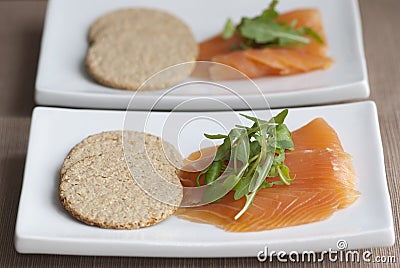
2 Oatcake biscuits (85cal) , 1 slice (85grams) smoked salmon (80cal) 165 calories

Who would think that so much nutritional benefit could be packed into such an unassuming little oat biscuit?  Oatcakes are a good source of plenty of vitamins and minerals, containing magnesium, Vitamin B6 and Potassium, Thiamin, Riboflavin and Niacin.  They also contain phytochemicals, vitamin E compounds, and lignans (all shown to reduce cancer risk),  and are an excellent source of soluble fibre. They can help with weight loss, keep you fuller for longer, and provide sustained levels of energy, helping to maintain a healthy blood sugar level.

Smoked salmon is an excellent source of lean protein and a good source of omega 3 fatty acids which lower cholesterol.  Packed with vitamins - A, E, D and B12 which are anti-oxidants which reduce cancer risk - and minerals - phosphorous, selenium, calcium and zinc which are beneficial to bones, protect against free radicals and help to regulate the metabolism.


Egg white mushroom & herb omelette & toast.......
 2 egg whites omelette with mushrooms and herbs (65 cal), 1 average slice toast (85cal) 150 calories

High in protein but containing NO fat or cholesterol (it is contained only in the yolk), egg whites are also very low in calories - 16 (the remaining 54 being in the yolk).  Egg whites also contain a number of minerals - selenium, magnesium, calcium, phosphorous and folate.  So not only a tasty, filling and nutritious breakfast but one which is also great for the waistline.


This list is by no means exhaustive and Im sure there are plenty more ideas out there - if you have a great breakfast idea for around 150 calories, please share!

Monday, 5 November 2012

Intermittent fasting goes mainstream!


It was good to see The Times picking up on intermittent fasting on Saturday.  It appears that everyone is doing it ....
What I liked about their report was that they emphasised the health benefits and also discussed the way in which the diet can change eating habits and the way we think about food.

It also showed some great meal ideas for fasting days.  Here is a link to the article - which if you're not already a Times subscriber, you'll need to sign up to read in full... http://www.thetimes.co.uk/tto/magazine/article3583372.ece 

If you're not, don't worry - I will continue to post pics of my fast day meals, such as my lunch on Saturday (pictured left).  Poached egg (80 cals), mushroom pate (40 cals), prawns (20 cals), lettuce, spinach and half a tomato (20 cals)...... Total 160 calories for lunch.... And delicious too!!! Leaving me 240 for dinner (I'd already had around 100 for my porridge breakfast).

There are different ways of approaching this.  I'm choosing to stick to a 500 calorie limit on alternate days.... "One day on, one day off", or "Alternate Day Fasting (ADF)"  The more popular approach seems to be the "5:2"..... Choosing 2 non consecutive days in the week to fast.   Those who can't quite face fasting every other day or find it impractical tend to go for this.

Another approach which I learnt through The Times article was to fast completely (0 calories), for 24hours but start that 24hr period part way through the day eg 2pm.   That way, you don't go a whole waking day without eating.   I might try this one day when I'm feeling brave, maybe not when I'm cycling to work, which I'm now doing again.

Grey legs (left) and I have been reunited and I cycle the 9km to work every day through the London traffic.   It's a magical way to start the day and I cycle whether I'm fasting or not.... Now that I'm used to the routine, the cycling doesn't make any difference and if anything I feel like I have more energy rather than feeling faint or weak.

I cycle past the Emirates stadium, home to Arsenal football team, and I must admit the burger and hot dog stands do get me going!!  But Grey Legs just keeps me on the straight and narrow and refuses to stop.....

Clearly as I'm burning more calories cycling around 20km a day, this should help me reach my 'drop a dress size before christmas' goal.  I was a size 14-16 for years but over the last 3 or 4 years, I gradually changed my eating habits, reducing the amount of carbs, sugar and processed foods.  Doing this, I dropped to a size 12 which I've managed to maintain for the last couple of years.....well with the odd slide back to a nearly 14. 

I'm now heading for uncharted territory ......the never before achieved size 10!!! (for anyone reading this in the USA, I'm talking a size 6)  I have never been a size 10 ....I was a size 14 when I was a teenager and my Mum and I would diet together - from weight watchers to fat units - we counted them all..... but never did I ever get into a pair of size 10 anythings.  Don't worry - I will keep you well and truly posted - literally!

I hope eating meals like heavenly rainbow trout, with peppers and fennel (pictured in the wok) for 240 calories, will help me stick to the IF plan...... with meals like that, it really is no hardship!


Nutrition tip of the week

Fennel is a much underrated but fabulously nutritional vegetable.  Packed with antioxidants, vitamins and fibre, it is delicious eaten either raw in salads or cooked in broths or sauteed in butter. 

Fennel has been shown to reduce inflammation and help in the prevention of cancer - which works by shutting down the signalling process which activates a gene-altering molecule which leads to the formation of cancer cells. 

Fennel is an excellent source of vitamin C, a powerful antioxidant which protects against cellular damage which causes joint deterioration and painful conditions such as osteoarthritis and rheumatoid arthritis.  It also boosts the body's immune system.     Fennel is quite a fibrous vegetable - particularly if you eat the stalks which you should.  Eating this soluble fibre helps to reduce elevated cholesterol levels and helps to prevent colon cancer by removing potentially carcinogenic toxins from the colon.

Fennel is a very good source of folate, a B vitamin that protects against heart attacks and strokes. It is also a very good source of potassium, a mineral that helps lower high blood pressure, another risk factor for stroke and heart attack.

Wednesday, 31 October 2012

A typical IF meal...

One of the most common questions I get about intermittent fasting is "what on earth do you eat?"  so in response, I will regularly post examples of the meals I eat on my so called 'fasting' days.  The picture on the left was my evening meal last night: Salmon with sun dried tomatoes and sesame seeds with chilli carrots, spinach, cabbage & raw tomatoes.

This is approx 270 calories in total:  200 calories for the salmon and 50 calories for the vegetables and an additional 20 calories for the sundries tomatoes and tiny drop of grapeseed oil.


 This is one of my favourite fast day meals...... Rich with vitamins and minerals from the carrots (shown here steaming in a small amount of water & garlic), spinach and cabbage (added after a few minutes) and a nice portion of protein and essential omega-3 fatty acids from the salmon.  And don't forget the chilli which has its own range of incredible benefits, not least that it increases the metabolism by increasing adrenalin and raising the heart rate, burning calories quicker.  I'll do a special on chillis in due course, it being one of my favourite things in the world, so watch this space!!


Nutrition tip of the day

Spinach in particular is incredibly nutrient dense.   Just one cup contains more than your total daily required amounts of vitamin K and vitamin A, nearly the total requirement of folate and manganese and nearly half  your daily magnesium allowance, which helps to lower blood pressure.  It is packed with antioxidants including vitamin C and beta carotene, which improve heart health by reducing cholesterol.
Spinach is also rich in large quantities of cancer fighting antioxidants.  For example, it contains a carotenoid that causes prostate cancer cells to destroy themselves, and it contains kaempferol which has been shown to reduce the risk of ovarian cancer.  Kaempferol prevents the formation of cancer cells and in addition to spinach, it can be found in tea, red wine, blueberries, apples, onions, broccoli, curly kale and leeks.

Spinach also helps to improve brain function by preventing the harmful effects of oxidation on your brain. Other leafy green vegetables such as curly kale and dark green cabbage (shown here being prepared for tonight's dinner) can also do this.....the darker the green, the better.

A few more nutrients packed into this little green life-giving machine include protein, iron (as Popeye would attest), dietary fibre and calcium!  And the best part???...... spinach is only 40 calories per cup so the perfect way to get the nutritional value you need while on a diet.

I know alot of people have an image of spinach as overcooked green slime.  Well, cooking the hell out of it will only deplete the nutrients and destroy the flavour.  It is best either added to your cooked vegetables right at the end of the cooking process, or eaten raw in salad.